
If your wheel develops a new noise, start by checking the fixings and the position of the stand.
Check the fixings
Keep cats away while you work. Remove the rear cover and check that the three nuts securing the wheel to its support are firmly tight. Keep the spring washers in place and use the supplied box spanner.
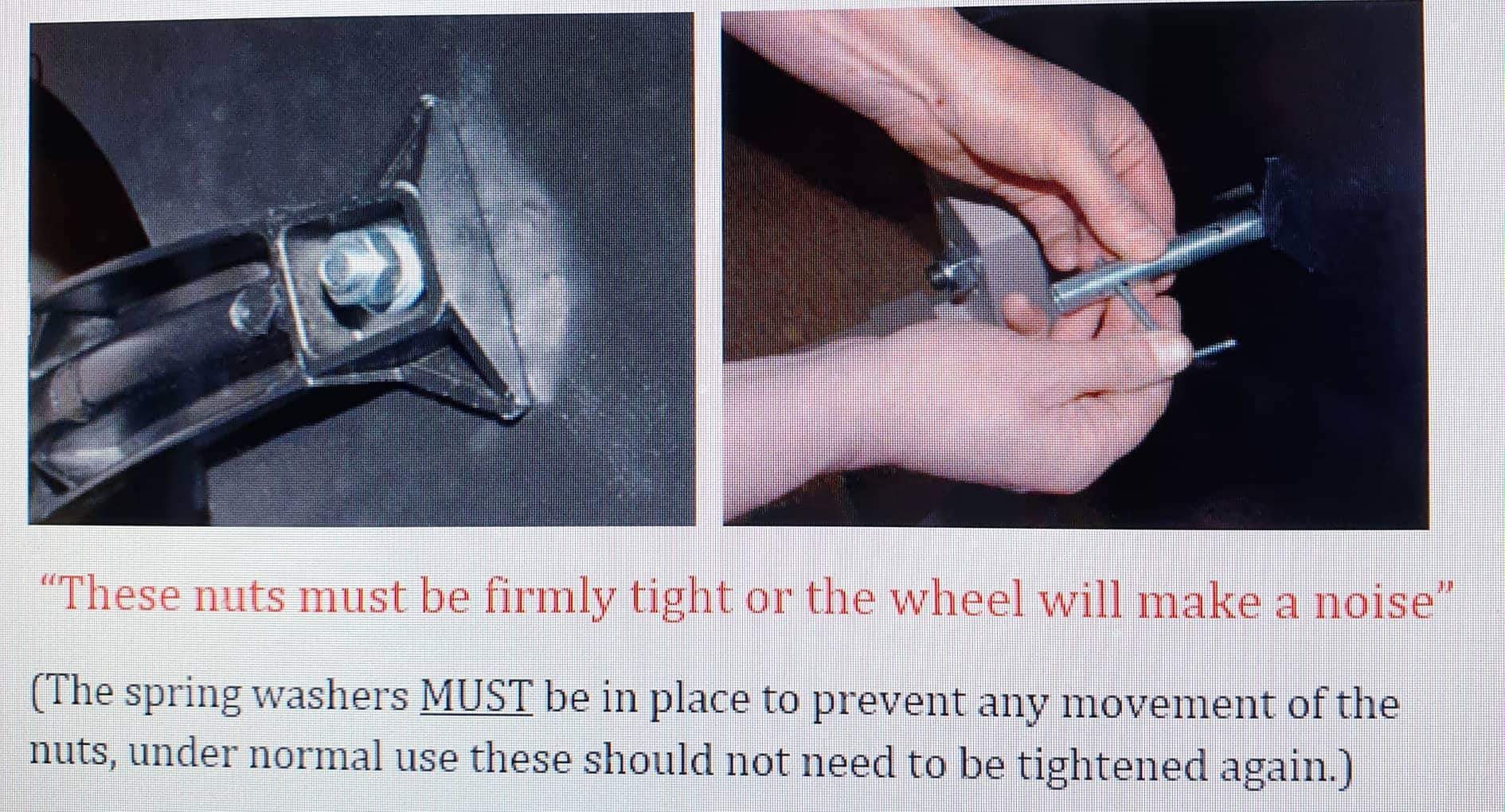
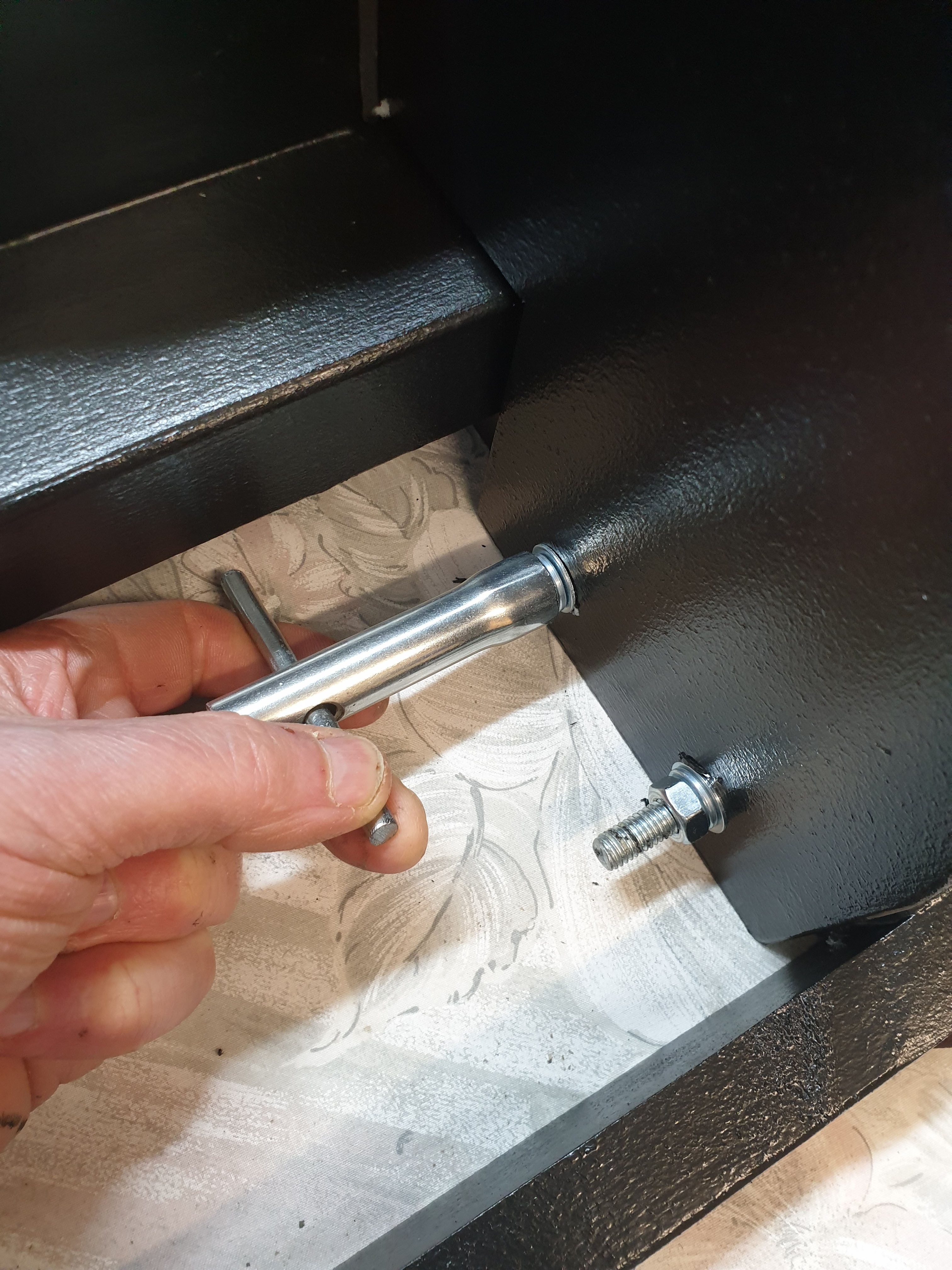
On a freestanding wheel, also check the two long bolts and nuts through the back of the stand base. Hold the bolt head with a flat-head screwdriver while tightening its nut. Wing nuts may need pliers or pincers to grip them firmly.
Lubricating the front bearing
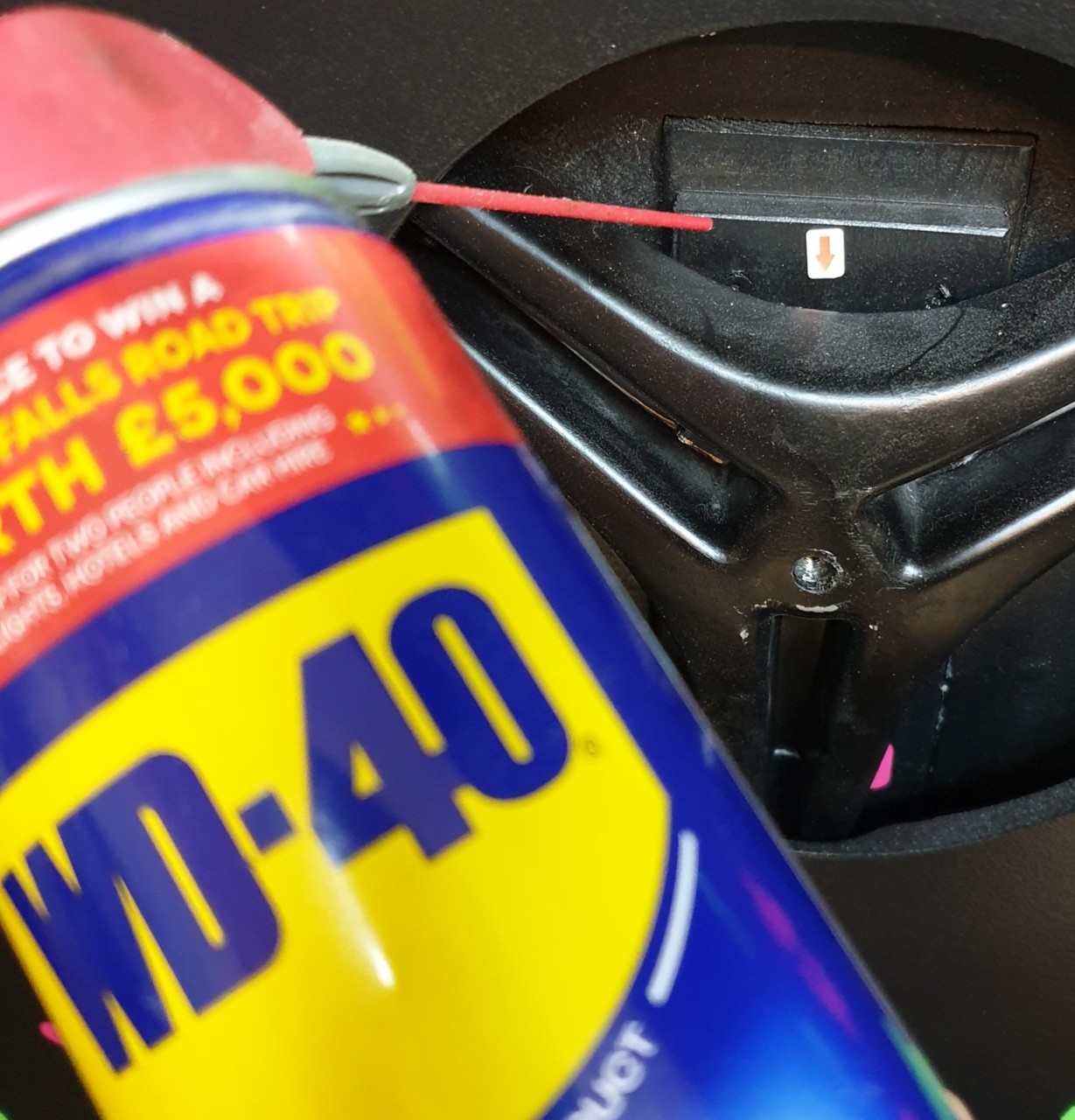
Remove the front cover and apply a little WD-40 between the back of the rubber spacer and the post, in the area shown below. An occasional application can help when the front bearing is running dry or has debris in it. Follow the instructions and precautions on the can.
Refit both safety covers securely before allowing cats to use the wheel again.
Positioning and movement
Some up-and-down and sideways movement around the central bearing is normal. Place a freestanding wheel on a level, carpeted floor. On a hard floor, use a rubber-backed carpet mat to help prevent the base moving.
Still making a noise?
If tightening the fixings and lubricating the front bearing have not helped, send us a short video with your support request. Tell us what you have already checked and whether a bearing has been replaced before.
Still need help? Ask us about your wheel.